
Writing by the Water: On Problem Solving, Teaching, and the Environment
Freesia McKee
I became a writing teacher while living in South Florida. Each day I biked to graduate school through Arch Creek Park in North Miami where I saw manatees and, once, dolphins in Biscayne Bay. Those mangroves are the only place I’ve ever found a real-life message in a bottle: a moldy photograph of a couple with words too waterlogged to decipher.
South Florida was also the place I became a Midwestern writer. Near the ocean, I couldn’t stop writing about Lake Michigan, “flyover” states, and my experience growing up in multicultural Milwaukee. I couldn’t stop writing about built environments, power, water, and the contradictions, complexities, and aggressive institutional disregard for plants and animals I observed. There were plenty of lessons about justice and persistence.
When my then-partner and I packed our car for interstate evacuation before Hurricane Irma—a first for both of us—we knew we needed water, but the shelves of our local food stores were almost empty, and as a pre-pandemic Midwesterner, I’d never seen anything like it. The only bottled water my partner could find was grape-flavored, carbonated. We’d missed the boat. She bought them out.
A few years later, leaving South Florida permanently in the early months of COVID and coming back to the Midwest, I’d return to freshwater: glorious floodplains in Fort Wayne, human-made blue lakes in cornfield Illinois, the marshy insistence of Edgar Lee Masters’s real Spoon River, and the Wisconsin River here in Stevens Point. My new town’s nickname is “City of Wonderful Water.” Its Menominee name is Pasipahkihnen, “land that juts out into the waters.” There are shadows of paper mills, a 19th century fly-fishing factory owned by a woman (and, lesbian, I suspect–or hope?) Carrie Frost, a clamshell button industry, logging, and, now, the threat of data centers.
This year in Stevens Point, I began my tenth year of teaching. I entered the school year not as I usually do, brimming with excitement and creativity, but instead feeling a good measure of existential despair. Teaching college students in an era of AI is not something I was trained to do, and the use of AI in the writing process is not something I’m particularly interested in learning more about. One of my greatest joys as a writer is the very problem-solving process AI seeks to eliminate: when your message isn’t coming through, you move stuff around, you write more about your ideas, and then you figure it out. A writer sees their ideas forming in front of them in real time. I know no greater joy than when, after great effort, the pieces of a paragraph or stanza click together.
For the bad rap English teachers get about our enforcement of tyrannical rules, I consider myself something of a grammar anarchist. As rhetorical theory will tell you, the “correct” grammar choice relies on context, which is to say, there are lots of contexts that play with other rulebooks. I love that as a writer, you’re charged with figuring out a series of context-appropriate solutions for every challenge your creation presents. This is the empowerment writing offers: you’re in charge of your voice and its consequences and freedoms. In certain ways, this means no one can tell you what to do.
Because of what I know to be true, I believe AI offers little and can improve little for writers in the act of writing. There are some contexts where “correctness” is important, where I suppose AI could help, but so could spellcheck. Maybe I’m missing something; I’ll admit I’ve been feeling grumpy for the past few years, for there is no big tech billionaire who can improve my experience of writing a poem.
AI is powered by data centers that need, notoriously, lots of water to operate. The Brookings Institute reports the average data center uses as much water daily as 1,000 US households. One could argue data centers are a particularly United States phenomenon. The US has the most, with 4,700+ data centers as I write in September 2026. In terms of sheer numbers, the UK and Germany rank in second and third place, each with fewer than 600. At the time of this writing, China has fewer than 400 and India has 305.
The Yale School of the Environment cites modeling that predicts by 2030, data centers in the US could collectively use as much water as all of New York State. The article goes on to point out that Northern Virginia is the current hub for new data center construction, but it won’t be able to keep up. The article quotes Jean Su, researcher at the Center for Biological Diversity, who says, “We can’t let billionaire corporations dictate policy while the rest of us pay the price. We have to ask what’s actually in the public interest.” We all know AI companies have targeted the Great Lakes next.
I have always told my students that I want them to take in information, analyze it, and forge their own convictions. Don’t believe something just because other people believe it. I want my students to think better and farther, to build what Audre Lorde wrote, a poetry that “lays the foundations for a future of change.” Many of my students already have their own keen convictions; others are trying to figure it out.
But how do we do this when our access to information seems to have been tainted, when, in my opinion, even Google has started feeling like a rinkydink piece of crap? Tech companies sell promises that implicate us in destroying the earth. Where is the internet of endless possibility and vast global community-building potential, pooling our best ideas without sacrificing their individuality?
At this point, I’m free to create my own policy for use of AI in my classroom. In short, my policy is, “Please do not use AI. You’re here to practice critical thinking.” My policy ignores the way AI is increasingly baked into Microsoft products, search engines, and hardware itself, and it ignores the normalization of AI in public life, including those ugly AI flyers I keep seeing. Because of the messaging about “responsible use of AI,” I fear the freedom to reject AI will be taken away from professors across the country. It’ll go down the drain with other freedoms like the right to collectively bargain or drive to work without Flock camera surveillance.
One of the lines that has always stuck in my head from MLK’s “I Have a Dream” is from Amos 5:24, “justice rolling down like water and righteousness like a mighty stream.” This ancient quote speaks to water’s innate power. Water always comes back in liquidity, in concert with gravity, physics beyond any dictator’s control. In the ironically juxtaposed phrase “mighty stream,” there’s something subversive, even anti-authority. One might think of the ideas in a poem as a mighty stream.
I do feel jaded, but I try not to lecture. I am still pretty young; I have thirty years left of working life. What will anything look like in thirty years? What will I say, then, about Miami, the city where I learned to teach? Right now, it’s hard for me to think about any of these questions.
Image Credit: Unsplash, Koen Emmers
John O’Boyle
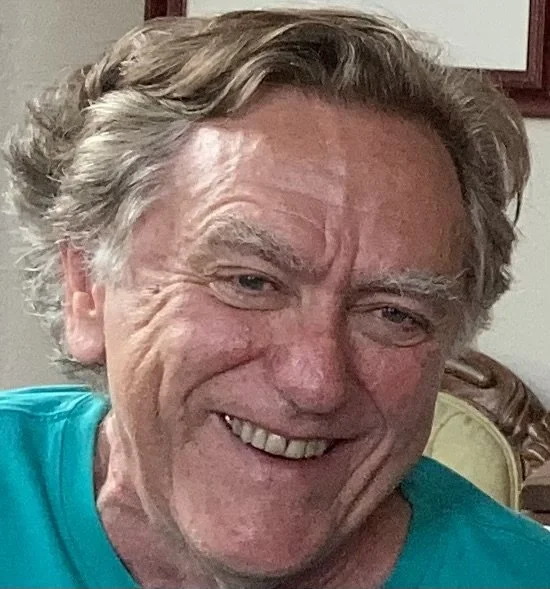
John O’Boyle has had a variety of careers including running an inner-city not-for-profit, house manager at a regional theater, commercial real estate development in the medical world, a Broadway producer (two Tony’s), composer/writer of Easter Mysteries, a Kosher Musical, and currently the Development Director of Northeast Wisconsin Land Trust.