
The Reality We Swim In
Bobbie Lee Lovell
David Foster Wallace began his famous 2005 commencement address with an older fish who greets two younger fish: “How’s the water?” One of the younger fish later asks the other, “What the hell is water?”
Statistically speaking, Wisconsin has more than 15,000 lakes, 84,000 miles of rivers and streams, 800 miles of coastline along two Great Lakes, plus 200 more miles along the Mississippi River. More specific to my part of the state: Lake Winnebago is the 28th largest in the U.S. (but hardly the deepest). The Fox River flows north like the Nile. And the Niagara Escarpment—over which Fonfarek and Wequiok Falls tumble, and which forms the Door County peninsula—is the same geological feature that sends Niagara Falls roaring between New York and Ontario.
Wisconsinites know water. It powers our economy, hosts our leisure, and inspires our art. It sustained Indigenous communities for millennia before giving rise to industries like logging, papermaking, shipbuilding, and brewing. We fish, float, swim, splash, sail, surf, paddle—and gaze at sparkles of light dancing on the ripples. We claim the “Waterpark Capital of the World” and the “Malibu of the Midwest.” Our lives’ soundtrack includes pattering rain, trickling snowmelt, and crashing breakers. Water calms us and thrills us—threatens some even as it nourishes others.
When my kids were young, I brought them to a favorite beach from my own childhood. At first, they stood, plastic pails in hand, not knowing what to do. “Dig a hole!” I exclaimed. “Build a sandcastle! Jump in the waves!” I demonstrated, and they got to it. In subsequent visits, we talked about why alewives wash ashore, how to skip a stone, and what to do if, heaven forbid, you get caught in an undertow.
And yet, as a little girl on Lake Michigan’s shore, I started out like Wallace’s younger fish: unaware of what surrounded me, unaware that not everyone has access to a beach, much less fresh water for drinking and bathing. Any east-bound street in my city eventually met the lake—predictable as the morning sun rising over it.
I soon learned where the water utility and wastewater treatment facility (or “chocolate factory,” as Dad called it) were located. We took an unsavory tour that answered questions about what happens after you flush the toilet. I learned why it was unsafe to swim in the Sheboygan River, or at Bay Beach in Green Bay. But the health consequences hit home years later when our adopted son received two diagnoses attributed to ingesting contaminated water in his birthplace prior to joining us.
My perspective deepened when I spent time in southern Arizona and the Sonoran Desert. Arizona receives roughly 60 percent less precipitation than Wisconsin, which is starkly apparent both in its earthy palette and environmental adaptations. Sand-colored squirrels and geckos scamper among thorny succulents. Palo verde trees sprout tiny leaves on green branches that conduct photosynthesis through smooth bark. I saw men toting gallon water jugs to what I imagined were tough jobs in harsh conditions. An AirBnB host spoke of water scarcity, encouraged short showers and later abandoned hosting to focus more on her community.
While the desert remains in my heart, I’ve never lived far from water I can’t see across. And I’ve come to understand that with abundant water comes abundant responsibility. My home state’s challenges include a legacy of PCB contamination and cleanup, aging urban infrastructure, harmful algal blooms, and the enormous demands of data center cooling systems. Last spring, we witnessed the destructive power of too much rain when flooding devastated towns like Shiocton, New London, and Janesville.
As a poet and occasional photographer, I’m a documentarian of sorts. You might be, too. Perhaps you’re also an activist. Both roles show up, separately or intertwined, in the art that reflects and enriches our lives—including the poems presented in this issue of Bramble. Sometimes we capture the breathtaking beauty of a world worth fighting for: a gracefully arcing cascade; a mallard afloat with her ducklings. Other times, we champion the fight itself, or honor the tragedy of loss—past or potential.
We create from the reality we swim in. Water, which comprises 60 percent of our bodies and covers 71 percent of the earth, earns its prominence in our discourse and imagery. It deserves as much from our decision-makers as it receives from our poets and Wallace’s older fish. If you’re reading this, I assume you’re a poet or have an interest in poetry, which leads me to assume you’re a curious person. Curiosity is a critical trait for any aspiring poet. How can we delve into any topic without contemplation or examination, or attempt to answer questions others might have?
Image Credit: Unsplash, Cristian Palmer
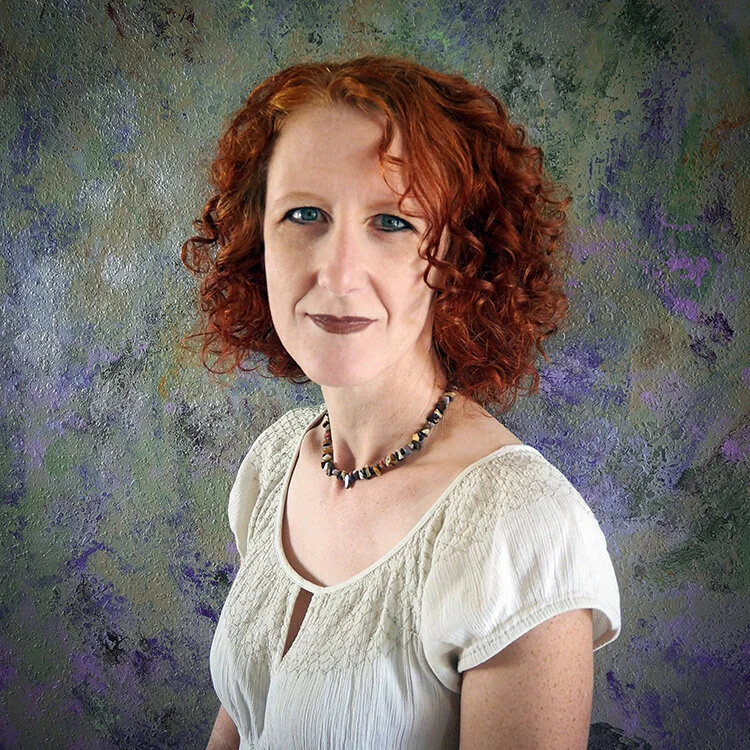
Bobbie Lee Lovell
Bobbie Lee Lovell’s poetry honors include Pushcart Prize and Best of the Net nominations, and several awards from the Wisconsin Fellowship of Poets. She assists with the Poetry Unlocked reading series in Appleton, Wisconsin, and is the author of a chapbook, Proposition at the Walk-In Infinity Chamber. Bobbie works as an in-house graphic designer in the Fox Valley and loves to hike when (or where) it’s warm outside.